

Expose the utility without breaking it.
Pressurized water breaks the soil apart and a vacuum lifts it into the truck. Nothing metal ever touches what is buried, which is why this is the method of choice around live gas, electric, and fiber.
12 cubic yard debris tank · 3,000 PSI · 800,000 BTU boiler · USDOT 3611071
A shovel still has a steel edge on it.
A locate ticket gives you a paint line on the grass. It does not tell you the depth, whether the line moved when the road was rebuilt, or whether the record was right to begin with. The only way to know is to look.
Hand digging is the traditional answer, and it is slow enough that crews start taking shortcuts. Water does not take shortcuts. It moves dirt and stops at the pipe, every time, no matter how congested the ground is.
Not sure whether you need one pothole or a whole stretch daylighted? Call 419-759-2351 and describe the site.
Emergency response
Hit something? Call before anybody digs further.
Dispatch answers 24 hours a day, 365 days a year. We cover all of Ohio and eastern Indiana, and the truck carries everything it needs to expose a line and clean up the site.
Seven jobs the vac truck does better than a bucket.
Potholing
Small, precise holes to confirm exactly where a line is and how deep, before anything mechanical goes in the ground.
Daylighting and utility locating
Opening the ground to put eyes on a buried line. A locate ticket tells you roughly where. This tells you exactly.
Fiber exposure
Exposing fiber without touching it. Water moves soil and stops at the conduit, which a bucket does not.
Slot trenching
Narrow trenches cut only as wide as the work needs, which keeps restoration small.
Bore pits and debris cleanup
Cleaning out entry and exit pits and pulling spoil off a site so the next crew has somewhere to stand.
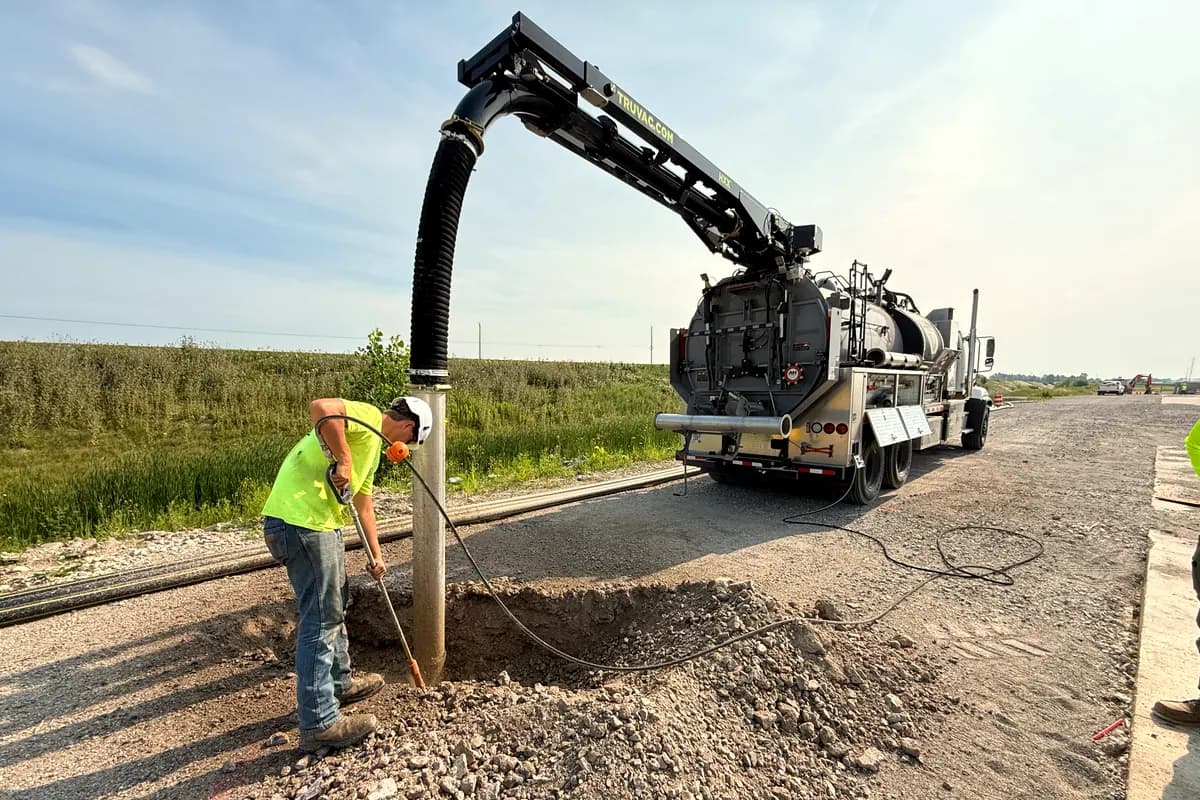
Utility pole holes
Pole holes cut in congested ground where an auger would be a gamble.
Frozen and cold-weather work
The 800,000 BTU boiler puts hot water on the wand, so the ground being frozen does not stop the job.
Non-destructive, and that is not a marketing word.
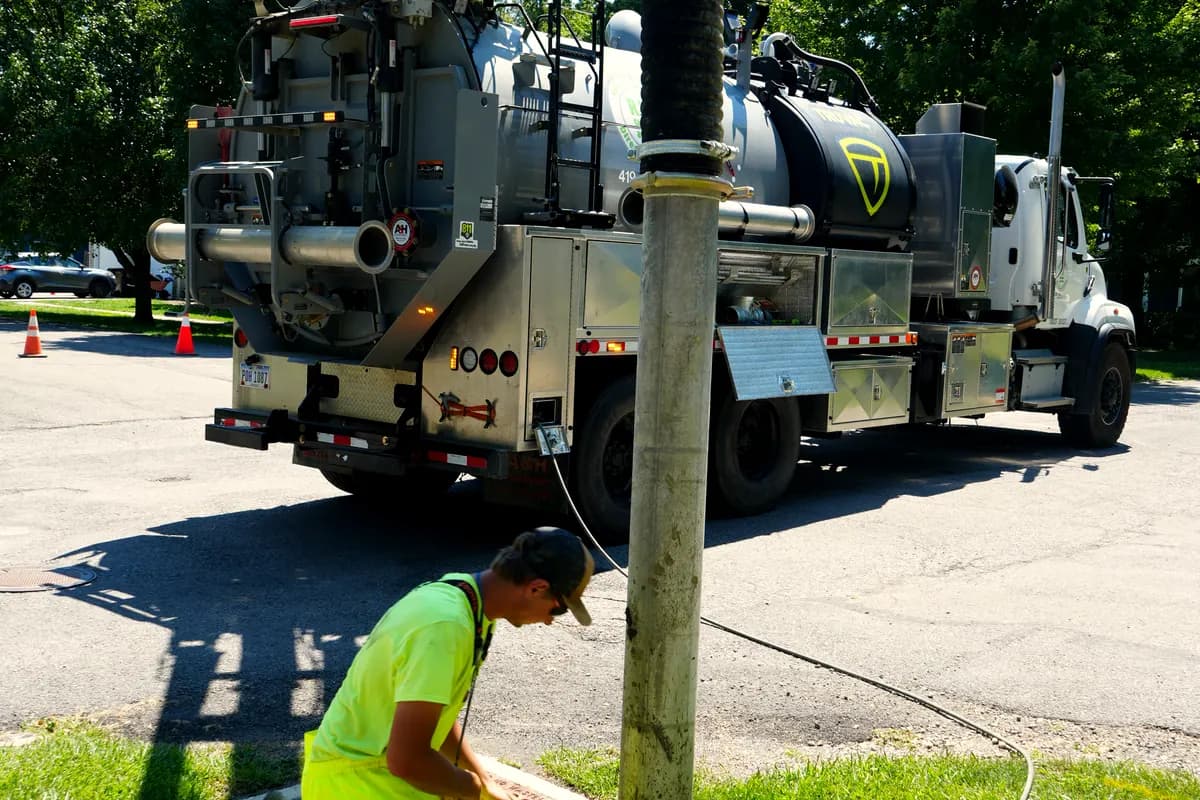
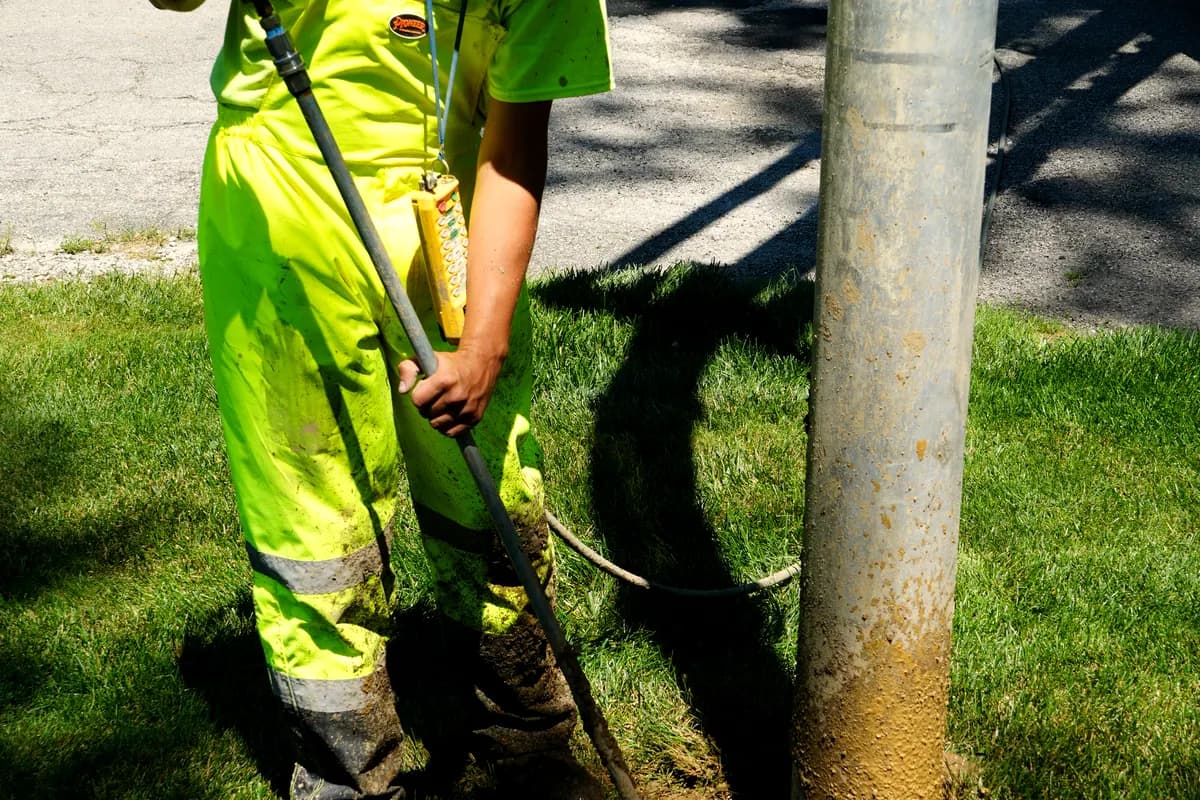
The wand puts water at 3,000 PSI into the soil, which breaks it into slurry. The boom takes that slurry straight into a 12 cubic yard debris tank at 4,970 CFM. The hole ends up only as big as the work needs, which keeps restoration small and keeps the surface intact around it.
Because nothing rigid enters the hole, the line comes up undamaged. That holds for brittle old clay tile, for poly gas service, and for fiber, which a backhoe operator can part without ever feeling it.
In winter the 800,000 BTU boiler puts hot water on the wand and the cold-weather package keeps the truck itself from freezing up. Frozen ground is a job, not a delay.
TrueVac HXX Hydro Excavator
The truck that finds what is already down there. 3,000 PSI of water and 4,970 CFM of vacuum move soil off a live line without touching it, and the boiler means a hard freeze does not stop the job.
TrueVac HXX Hydro Excavator
- Debris capacity
- 12 cubic yards
- Water capacity
- 1,200 gallons
- Vacuum
- 4,970 CFM at 18 in Hg
- Water pump
- CAT
- Water pressure
- 3,000 PSI
- Water flow
- 20 GPM
- Boiler
- 800,000 BTU hot water
- Vacuum boom
- 7 ft telescoping
- Boom rotation
- 320 degrees
- Cold weather
- Recirculation pump, heated components
Utility contractors
Crews who need a bore put in or a line daylighted without pulling their own people off the job.
Telecom and fiber
Conduit placed and existing fiber exposed without a strike report.
Municipalities and villages
Water, sewer, and street work where the surface has to go back the way it was found.
Industrial and manufacturing
Plant work where a shutdown costs more than the job does.
Oil and gas
The work this company was formed to do in 1976, and still does.
We can put the line in too, with our own rig.
Plenty of hydrovac outfits only dig. We daylight what is buried, bore the new line, and clean out the pits afterward, all with one crew. See how the drilling side works.
What we need to quote a vac job
You do not need all of it. Bring what you have and we will work out the rest on the phone.
- 01Where the job is, and how many holes or how much footage
- 02What you are trying to expose, and roughly how deep
- 03Whether there is a dump site for spoil, or we haul it
- 04Whether there is water on site to refill
- 05Surface type, and whether it is inside a right of way
- 06Whether the site has access for a tandem-axle truck
What people ask before they book the truck.
If your question is not here, call and ask, or read the full list of questions. You will get a straight answer from someone who has run the wand.
What is hydro excavation?
Pressurized water breaks the soil apart and a vacuum lifts it into a tank on the truck. Nothing metal touches what is buried, which is why it is the method of choice around live gas, electric, and fiber.
Why not just dig by hand?
A shovel still has a steel edge on it, and hand digging is slow enough that crews start taking shortcuts. Water moves dirt and stops at the pipe. It is faster than hand digging and it does not care how congested the ground is.
What is potholing, and what is daylighting?
Potholing is cutting a small, precise hole to confirm exactly where a line sits and how deep. Daylighting is opening enough ground to put eyes on the line along a stretch. Both exist so the next machine on site is not working blind.
Do you haul the spoil away?
We can. The truck holds 12 cubic yards of debris. If there is a dump site on the job it saves you money, so it is one of the questions we ask when we quote. Either way, tell us up front.
Do you work in freezing weather?
Yes. The truck carries an 800,000 BTU hot-water boiler and a cold-weather package with a recirculation pump and heated components, so frozen ground is a job rather than a delay.
What do you need from us on site?
Access for a tandem-axle truck, water to refill if it is a long day, and somewhere to put the spoil if you have it. Everything else comes on the truck.
How fast can you get there?
Dispatch answers 24 hours a day, 365 days a year, and we cover all of Ohio and eastern Indiana. Call 419-759-2351 and we will tell you honestly where the truck is and when it can be on your site.
Tell us what you need exposed.
24/7 dispatch, 365 days