

Get the line under the road, not through it.
Horizontal directional drilling puts gas, water, electric, fiber, and sewer where they need to go without opening the surface in between. One pit at each end, and everything else stays exactly as you found it.
USDI operator qualified · OSHA 10 · Ohio 811 trained · USDOT 3611071
When you cannot open the ground, or should not.
A trench is fine across an empty field. It stops being fine the moment it has to cross a state route, a customer’s driveway, a rail line, a creek, a parking lot you just paved, or a yard the homeowner is standing in.
Boring drills a steered path under all of it. There is no saw cutting, no backfill, no compaction, no pavement repair, and no lane closure while it happens. On most crossings the restoration you avoid is where the money actually is.
If you are not sure whether a run should be bored or trenched, say what it crosses and how long it is. Call 419-759-2351 and we will tell you straight, including when trenching is the cheaper answer.
Emergency response
A line down at 2am is still a line down.
Dispatch answers 24 hours a day, 365 days a year, across all of Ohio and eastern Indiana. Tell us where you are and what happened, and we will tell you honestly how fast we can be there.
Five kinds of line, one method.
Gas
Steel and poly gas main and service, put in by a family that has worked around live gas since the late 1800s.
Water
Water main, service lines, and crossings where opening the surface is not an option.
Electric
Primary and secondary electric conduit, including runs under drives and roadways.
Telecom and fiber
Conduit for fiber and telecom, placed to the depth and separation the owner specifies.
Sewer
Sanitary and storm work, including the village sewer projects that come with tight surface restrictions.
And what we go under
- Roads and state routes
- Driveways and parking lots
- Rail
- Creeks and water crossings
Five steps, in this order, every time.
01
Plan and locate
Tickets in, existing utilities marked and daylighted where it matters, entry and exit set, and the bore path laid out against what is already in the ground.
02
Pilot bore
The pilot head goes in on the planned path, steered and tracked the whole way so depth and line stay where they are supposed to be.
03
Ream and enlarge
The hole gets opened to the diameter the product needs, in one pass or several depending on soil and size.
04
Pullback
Pipe or conduit is pulled back through the reamed hole. With 28,000 pounds of pullback there is margin for the pulls that get tight.
05
Connect and restore
Tie in, close the pits, and put the surface back. This is the step that decides what the job looks like a month later.
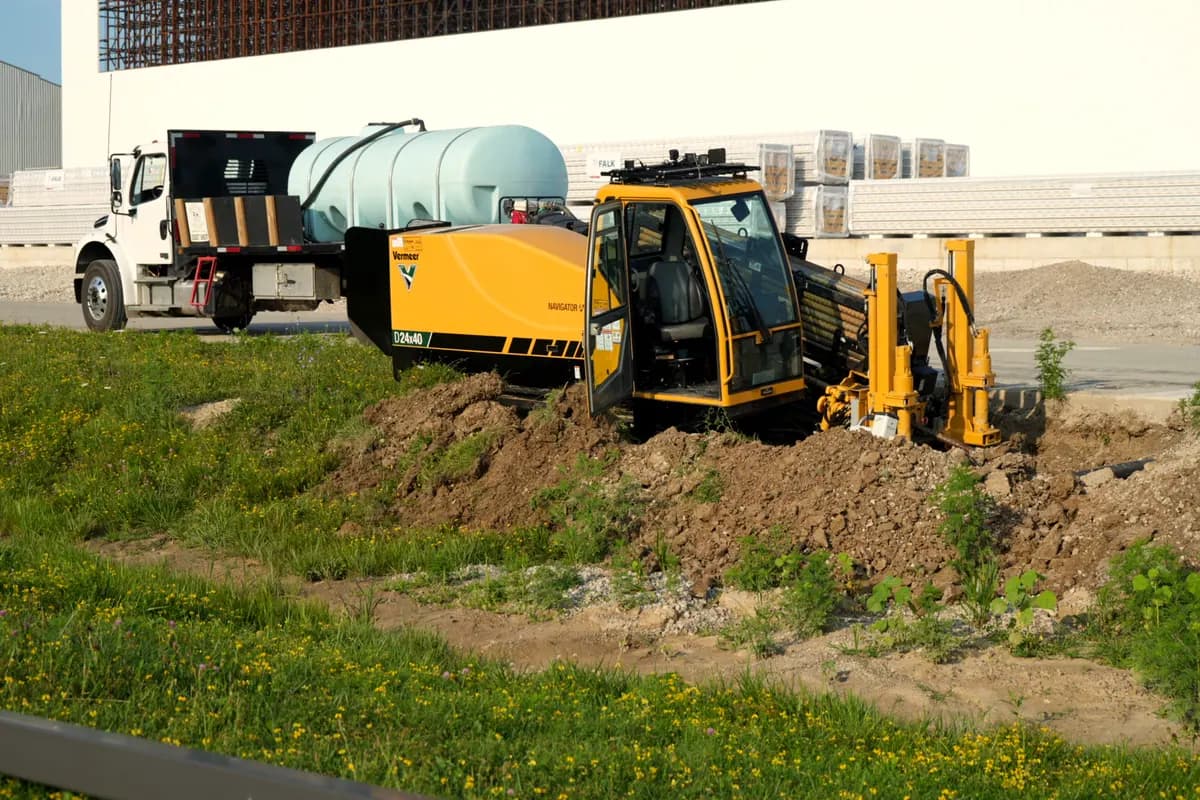
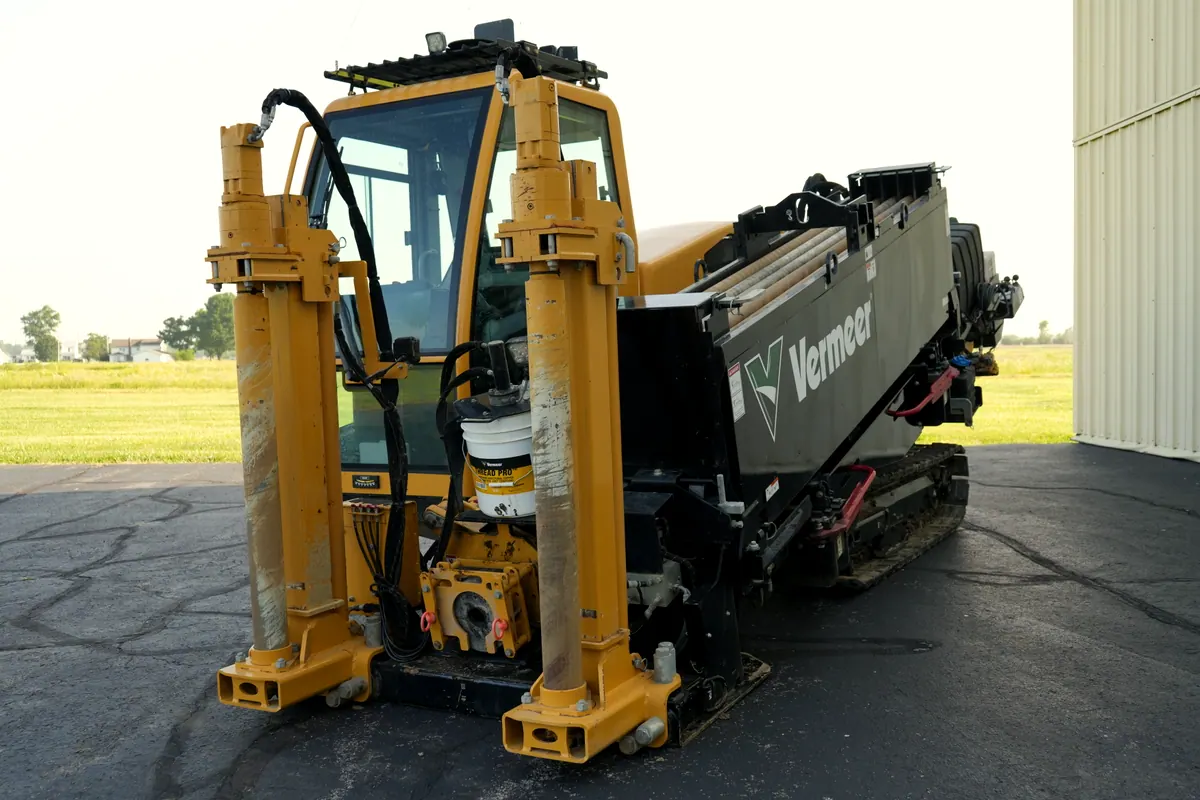
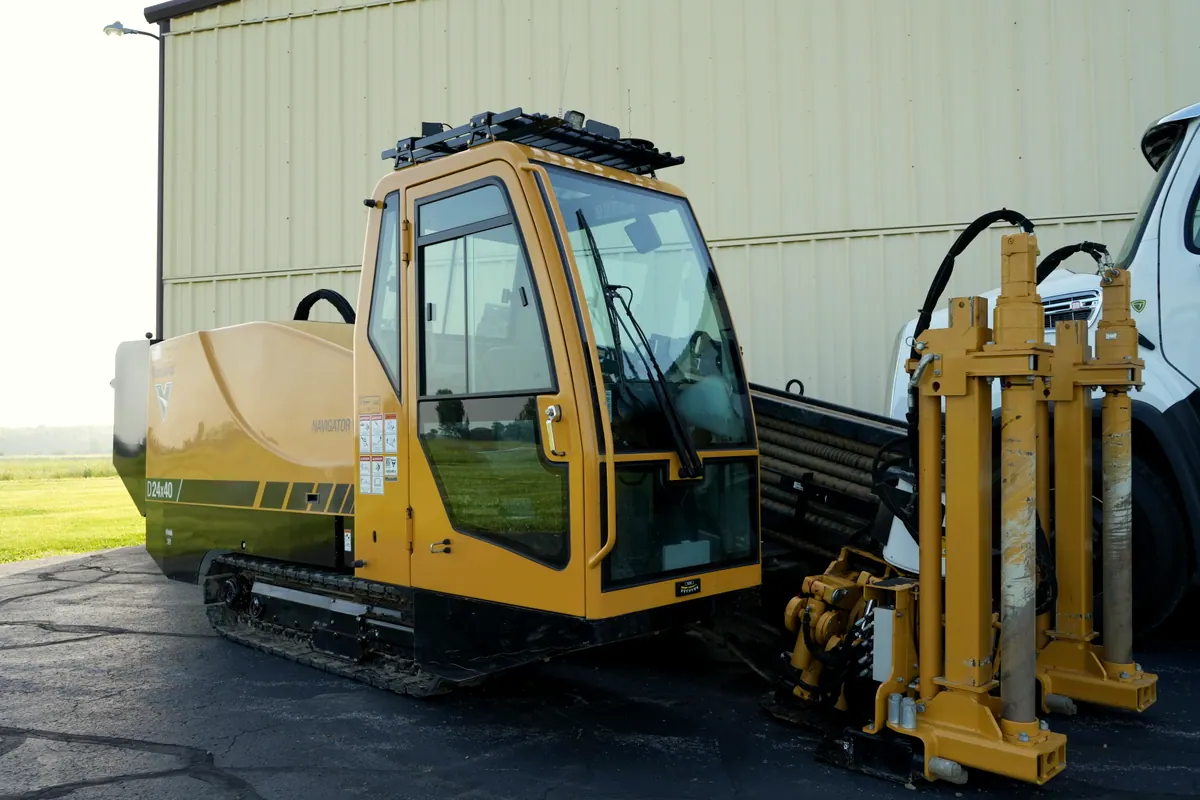
Vermeer D24x40 S3 Navigator
The rig that puts the line in. 28,000 pounds of thrust and pullback covers most utility work in this region, and the 108 foot bend radius is what lets a bore get under a road and back up on the other side without kinking the product.
There is also a smaller Vermeer boring machine in the fleet for tight-access work and smaller line installs, for the jobs where the D24x40 will not fit or is more machine than the run needs.
Vermeer D24x40 S3 Navigator
- Thrust / pullback
- 28,000 lbs
- Maximum torque
- 4,200 ft-lbs
- Maximum spindle speed
- 270 RPM
- Engine
- John Deere 4045, 125 HP
- Rod length
- 10 ft Firestick
- Rod diameter
- 2.38 in
- Maximum carriage speed
- 240 ft/min
- Drilling fluid flow
- Up to 50 GPM
- Maximum fluid pressure
- 1,050 PSI
- Minimum bore diameter
- 4 in
- Bend radius
- 108.2 ft
Utility contractors
Crews who need a bore put in or a line daylighted without pulling their own people off the job.
Telecom and fiber
Conduit placed and existing fiber exposed without a strike report.
Municipalities and villages
Water, sewer, and street work where the surface has to go back the way it was found.
Plumbers and electricians
One line under one drive, done in a day, without a trench through the customer's yard.
Oil and gas
The work this company was formed to do in 1976, and still does.
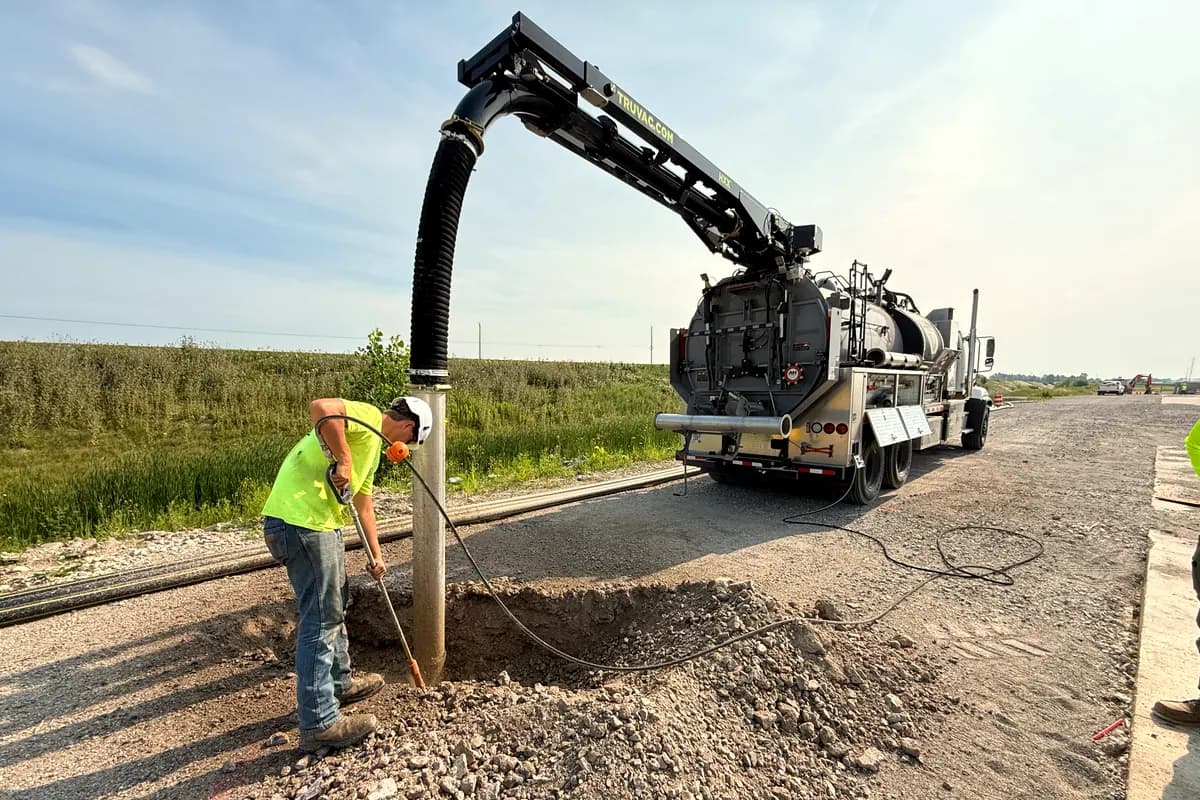
We daylight the line before we bore, with our own truck.
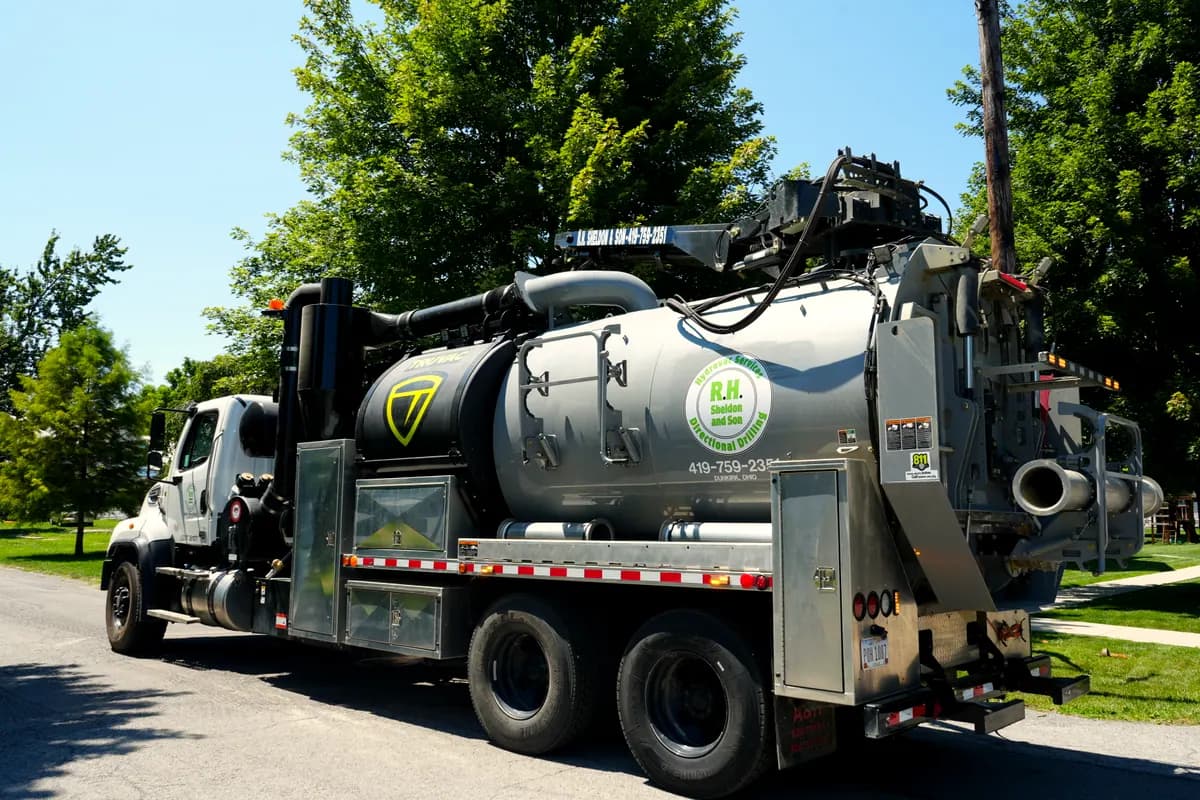
Most boring contractors hire a vac truck to expose what is buried and to clean out the pits afterward. We own ours, so there is one crew, one schedule, and nobody pointing at anybody else. See how the hydro excavation side works.
What we need to quote a bore
You do not need all of it. Bring what you have and we will work out the rest on the phone.
- 01Where the job is, and how long the run is
- 02What is going in the ground: pipe or conduit, size, and material
- 03Who is supplying the pipe, you or us
- 04Whether permits are handled, and by whom
- 05Whether there is water on site for drilling fluid
- 06What the surface is at each end, and what has to go back
What people ask before they book a bore.
If your question is not here, call and ask, or read the full list of questions. You will get a straight answer from someone who has run the machine.
What is directional boring, and how does it work?
A tracked machine drills a steered pilot hole along a planned path underground, then pulls a reamer back through to open the hole to size, then pulls the pipe or conduit in behind it. The only ground opened is a pit at each end. Everything between the two stays untouched.
What does a bore cost?
It depends on the length of the run, the diameter and material going in, the soil, and what is already buried along the path. Rock, heavy congestion, and road crossings move a price more than footage does. Call 419-759-2351 with the run and we will tell you what it takes.
What can you pull in?
Gas, water, electric, sewer, and telecom and fiber conduit. Minimum bore diameter on our D24x40 is 4 inches, and it pulls back at 28,000 pounds, which covers most utility work in this region. The equipment page lists the full numbers.
Who handles permits and 811 locates?
Locates always get called, on every job. Who files the permit depends on the owner and the right of way, so it is one of the first things we settle when we scope the work. Tell us what you have already filed and we will pick up the rest.
How long does a bore take?
A single service under a driveway is often a day. A long run under a state route with congestion around it is not. Soil, diameter, and how much has to be daylighted first drive the schedule more than length does.
Why bore instead of open trenching?
Because of what you do not have to put back. A trench across a road means saw cutting, backfill, compaction, and pavement repair, plus a closure while it happens. A bore leaves the surface alone, which is usually where the savings actually are.
Can you cross a road, a rail line, or a creek?
Yes. Road and driveway crossings are routine. Rail and water crossings get planned around the owner's requirements, which usually means depth, casing, and a permit. Our safety page covers how we plan around what is already down there.
Are you licensed and insured?
Fully insured through Huntington Insurance, with certificates available on request. USDOT 3611071. The crew carries OSHA 10 cards and Operator Qualifications through USDI covering pipeline installation, utility locating, directional drilling, and pipe fusion.
Tell us what the run crosses.
24/7 dispatch, 365 days